Pantry Moth Larvae On Your Ceiling: Finding The Source
A small caterpillar near the kitchen ceiling can send you looking for a roof leak or something inside the wall. With pantry moths, the trail usually leads back to stored food. The insect may have crawled well beyond the package where it developed, so the cupboard directly below it isn't necessarily the source. Removing the caterpillars you can see is a useful first step. Lasting control depends on identifying them correctly and finding the food that's supporting the infestation.
Why Pantry Moth Larvae End Up On Ceilings
Indianmeal moths are a common pantry pest. Their larvae feed in dried foods, then leave to find a sheltered place to pupate, the stage between a caterpillar and an adult moth. A wall corner or the junction between a wall and ceiling can provide a place to spin a cocoon. That wandering behavior explains why you might notice insects overhead before seeing anything wrong with your groceries.
The larvae are usually pale or creamy white with a brown head, although their body color can vary with their food. Fully grown larvae are roughly half an inch long. Adults have two-toned wings, pale near the body and coppery reddish brown toward the outer portion. Fine silk webbing in a food package is another useful clue.
Location alone doesn't confirm the identification. Other insects can look wormlike, and an unfamiliar moth isn't automatically a pantry pest. Take a clear close-up photograph or save a specimen in a closed container if you're unsure. Correct identification matters before you start discarding food or choosing a control product.
Finding The Food Source And Cleaning It Out
Start with stored dry foods, paying particular attention to packages that haven't been used recently. Work through one shelf at a time and inspect the contents, inner bags, and folded seams. Look for moving larvae or silk that binds food particles together; a quick glance at the outside of a box can miss the problem.
Flour and cereal deserve attention, but the search shouldn't end there. Nuts, dried fruit, dry pet food, and birdseed can also support Indianmeal moths. Check those supplies wherever they're stored, including a utility room or garage. At Ease's advice on pet food storage also addresses the everyday habits that leave these supplies accessible to pests.

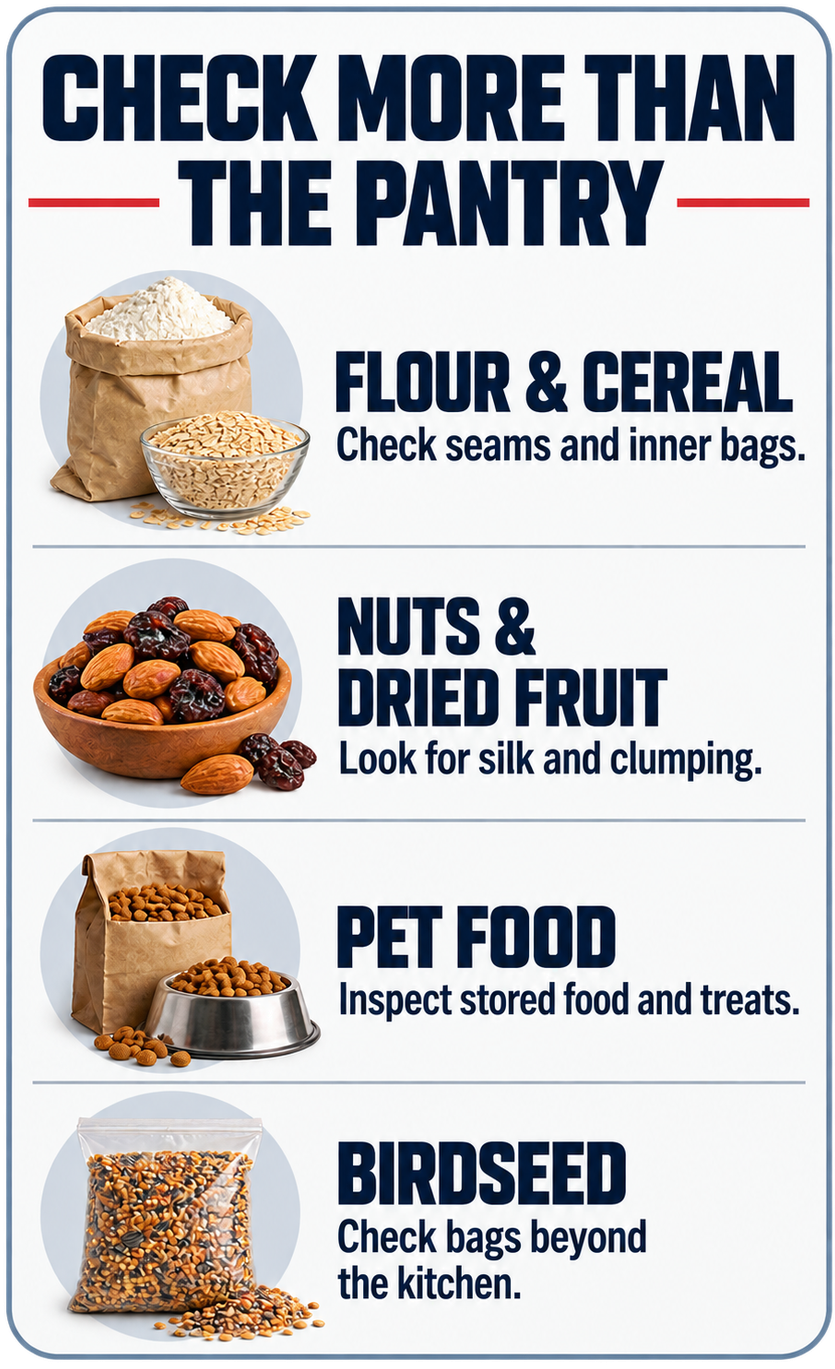
An unopened package isn't proof that the contents are unaffected. Pantry pests can enter through seams or penetrate some thin packaging, and a product may already contain insects when you bring it home. Inspect neighboring packages even after you've found one obvious source. If the usual food checks turn up nothing, consider overlooked items made with grain or seeds. A rice-filled heating pad or a child's dried-food craft can be worth examining. Keep searching beyond the first cupboard, especially if insects are appearing in another room.
Once you identify infested food, seal it in a bag and remove it from the house. Don't pour replacement food into a container that still holds remnants of the old supply. Empty and wash reusable containers, then let them dry before refilling.
Remove the remaining packages from the affected cupboard before cleaning. Use a vacuum crevice attachment along shelf joints, corners, and other gaps where crumbs or insects collect. Remove accessible larvae and cocoons from nearby surfaces, then empty the vacuum into an outside trash container. Wash the shelves with soap and water and let them dry before putting food back.
Store inspected, unaffected food in glass, metal, or heavy plastic containers with tight-fitting lids. A folded bag or loosely closed cardboard box offers less protection. Avoid household insecticide sprays in food-storage cupboards; they won't eliminate insects protected inside packages, and they can contaminate food and food-contact surfaces.


What To Expect After Cleanup
Seeing an adult moth shortly after cleanup doesn't necessarily mean you missed the source. Larvae that had already left the food may finish developing in hidden places. University of Minnesota Extension notes that Indianmeal moths can still appear for up to three weeks after infested food is discarded. Continued sightings beyond that point warrant another search for an overlooked source.
Pantry moth pheromone traps can help you monitor activity. Traps intended for Indianmeal moths attract adult males; they don't remove eggs or larvae inside food. Follow the product's placement directions, check it regularly, and note whether catches are declining. A fresh increase is a reason to inspect the stored food again.
Before restocking heavily, check new purchases for damaged packaging and use older supplies first. Keep infrequently used ingredients where you can see and inspect them, rather than leaving partially used bags behind newer groceries. Clean containers between batches so residue from an older supply doesn't stay hidden underneath fresh food.
If larvae keep returning, or you can't connect them to a food source,
contact us about an inspection. Share where you've seen the insects and which products you've already checked or discarded. Those details can help narrow the search without repeating work you've already done.



