Hidden Pests That Can Hitchhike Indoors on Firewood
A stack of firewood can look perfectly clean and still be full of hiding places. Loose bark, cracks, damp wood and the spaces between logs give spiders, beetles, ants, cockroaches and other pests somewhere dark and protected to settle in. Most of these pests aren't trying to invade your home. They were already living in or around the wood. The problem starts when the firewood comes inside and they come with it.
For homeowners in North Carolina and South Carolina, this is especially common during fall and winter, when wood that has been sitting outside for weeks or months suddenly gets carried into a warm house. A few simple storage habits can greatly reduce the chance of bringing unwanted hitchhikers indoors.
Why Firewood Attracts Pests
A woodpile creates exactly the kind of environment many pests like. It stays shaded, holds moisture and offers countless cracks and protected spaces. Wood stored directly on the ground can stay damp underneath. Leaves and debris collect between logs, and loose bark gives insects and spiders another layer of shelter. The longer a pile sits undisturbed, the more time pests have to move in.
Some species simply hide between logs. Others live beneath the bark or develop inside the wood itself, so you may not see anything unusual when you pick up a piece. Once that log is brought into a heated home, hidden insects may become active.
Pests Commonly Found in Firewood
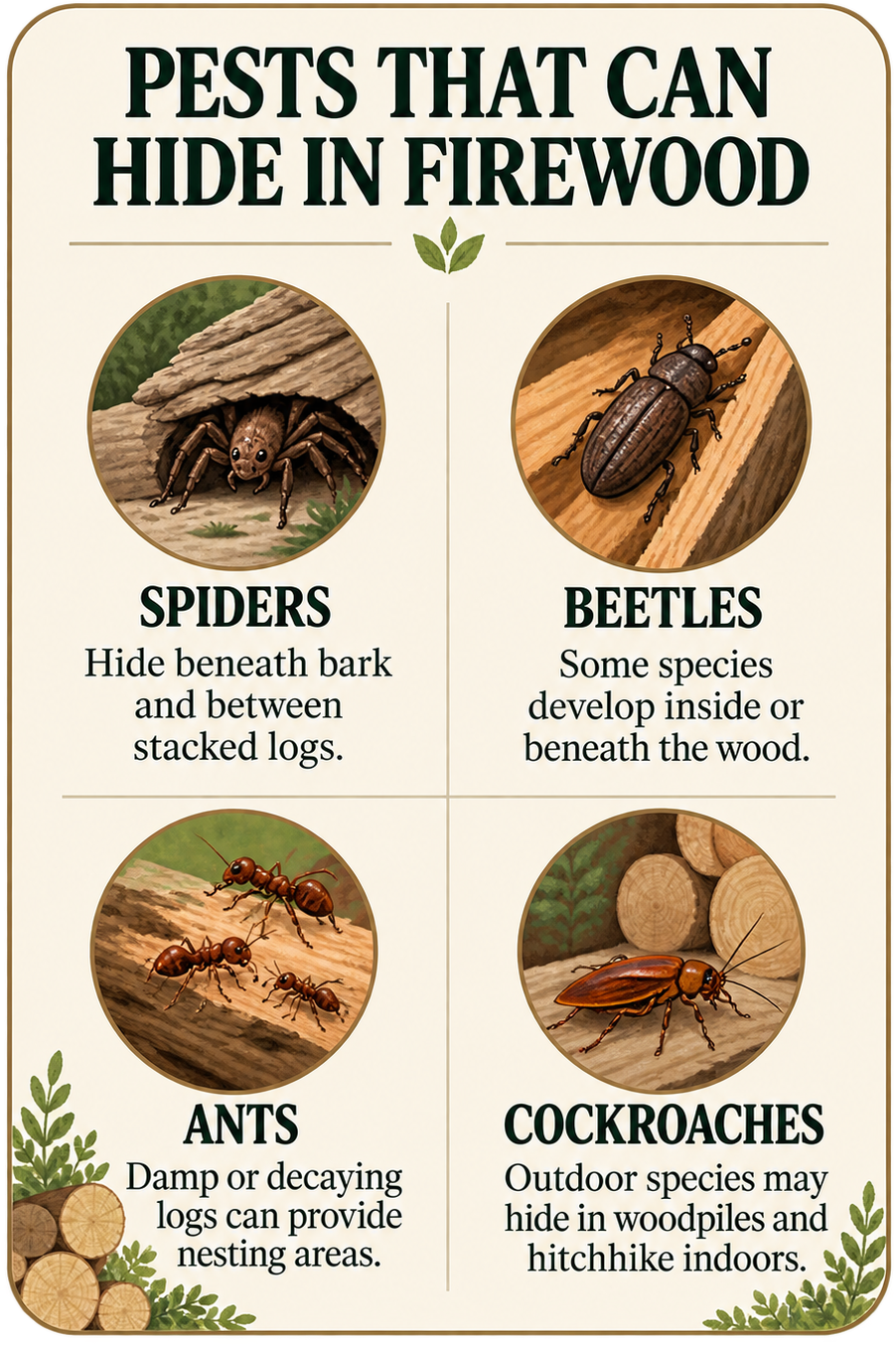
Spiders are among the most common hitchhikers. They hide beneath bark and between pieces of wood where they can stay protected and hunt other insects. Beetles are another frequent firewood pest. Some wood-boring beetles spend part of their life cycle inside logs, so an adult beetle may emerge after the wood has been indoors for a while. Finding a beetle near the fireplace doesn't automatically mean your house is infested, but repeated activity elsewhere should be investigated.
Ants can also settle into firewood, especially damp or decaying pieces. Carpenter ants are particularly associated with moist wood because they excavate galleries inside it for nesting. A log containing ants can carry them indoors, while a damp woodpile against the house keeps ant activity close to the foundation.
Cockroaches may hide in woodpiles too. Outdoor wood cockroaches naturally live around wooded areas, loose bark and decaying logs. They sometimes hitchhike inside with firewood. These outdoor species are different from German cockroaches that commonly establish indoor infestations.

Termites Can Turn Up in Firewood Too
Termites can also be found in firewood, particularly when logs are stored directly on soil or remain damp for long periods.
Finding termites in a piece of firewood doesn't automatically mean termites are attacking the house. The bigger concern is where that firewood is stored.
A pile leaning against the foundation creates a source of wood, moisture and shelter immediately beside the structure. It can also make the foundation harder to inspect. Keeping firewood elevated and away from the house reduces that risk. Keeping firewood beside the back door may be convenient, but it also creates a protected pest habitat exactly where you don't want one. Woodpiles can hold moisture against siding and foundations while providing shelter for ants, spiders, cockroaches, beetles and other insects. Rodents may also use larger piles for cover.
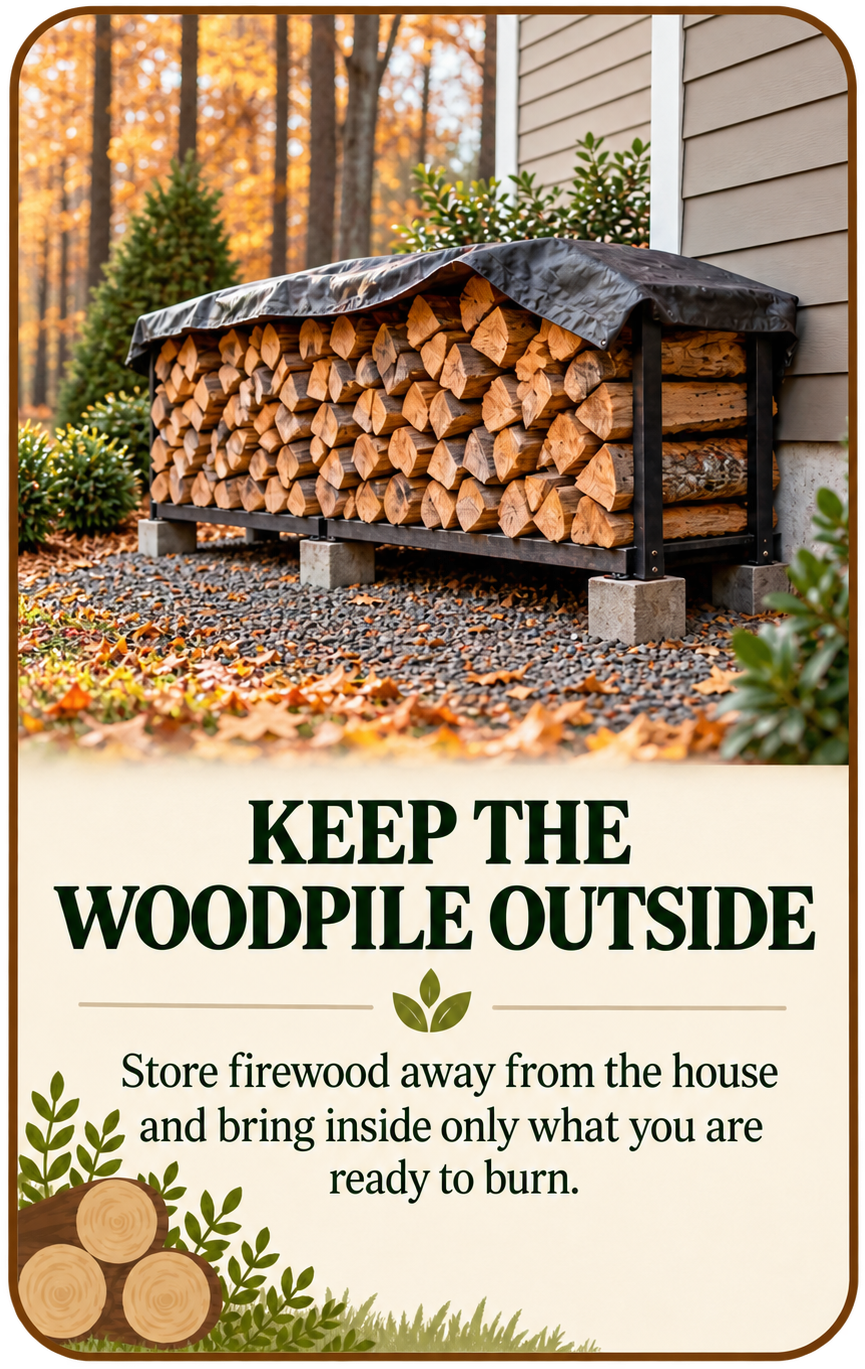
Store firewood away from the house whenever possible. Raise it off the soil on a rack or other support and keep the sides open so air can circulate. A cover over the top can help keep rain off without trapping moisture throughout the stack.
This doesn't make firewood pest-free. It simply prevents the woodpile from becoming an easy bridge between outdoor pests and your home.
One of the easiest ways to prevent firewood pests indoors is to leave the wood outside until you need it.
Avoid bringing several days or weeks of firewood into the house at once. Bring in a small amount that can be burned soon.
The longer logs remain indoors, the more time hidden insects have to warm up, become active and crawl away from the pile.

Check Each Load Before It Comes Inside
You don't need to inspect every log in detail. A quick check can still catch obvious problems. Look for insects, webs, loose bark, mud, soft decayed areas or visible galleries. Knock pieces together or brush away debris before carrying them inside.
If an occasional spider, beetle or other insect appears after firewood has been brought in, removing it or vacuuming it up may be all that is needed.
Repeated pest activity is different. If ants, cockroaches, beetles or other pests continue appearing throughout the house, the firewood may not be the only source.
Firewood can transport more than household pests. Moving untreated wood long distances can spread invasive insects and tree diseases into new areas. Buying firewood close to where it will be burned helps reduce that risk. This is especially important when traveling, camping or bringing wood between regions. Locally sourced or properly heat-treated firewood is the better choice when you need to purchase wood rather than cut and store your own.
Firewood Doesn't Have to Mean Pests Indoors
Firewood is a natural material stored outdoors, so finding an occasional insect around it isn't unusual. The goal is to keep those outdoor pests from getting an easy ride into the house. Keep the woodpile away from the foundation, raise it off the ground, avoid letting it stay excessively damp and bring indoors only what you plan to burn. Those few habits can prevent many of the pest problems associated with stored firewood.
If you're seeing ants, cockroaches, spiders, beetles or other pests throughout the home rather than only near the fireplace or wood storage area, At Ease Pest Solutions can identify what you're dealing with and determine whether the problem is coming from firewood or another source around the property.



