Why Ants, Cockroaches, Millipedes and Other Pests Show Up After Heavy Rain
A heavy Carolina rain can change pest activity around a home almost overnight. The yard gets soaked, mulch stays wet, soil becomes saturated and water starts collecting in low areas around foundations, patios and crawl spaces. Pests that were already living outside may suddenly find their usual hiding places flooded or far less comfortable. That’s when homeowners across North Carolina and South Carolina often start seeing ants, cockroaches, millipedes, centipedes and other crawling pests where they weren’t before.
The rain usually didn’t create the pest problem. It changed the conditions around the property and forced pests to move. A home can offer exactly what they’re looking for: drier shelter, stable temperatures, food and protection from the weather.
Understanding why this happens can help you reduce the chances of a temporary increase in pest activity becoming an indoor infestation.
Heavy Rain Changes the Environment Around Your Home
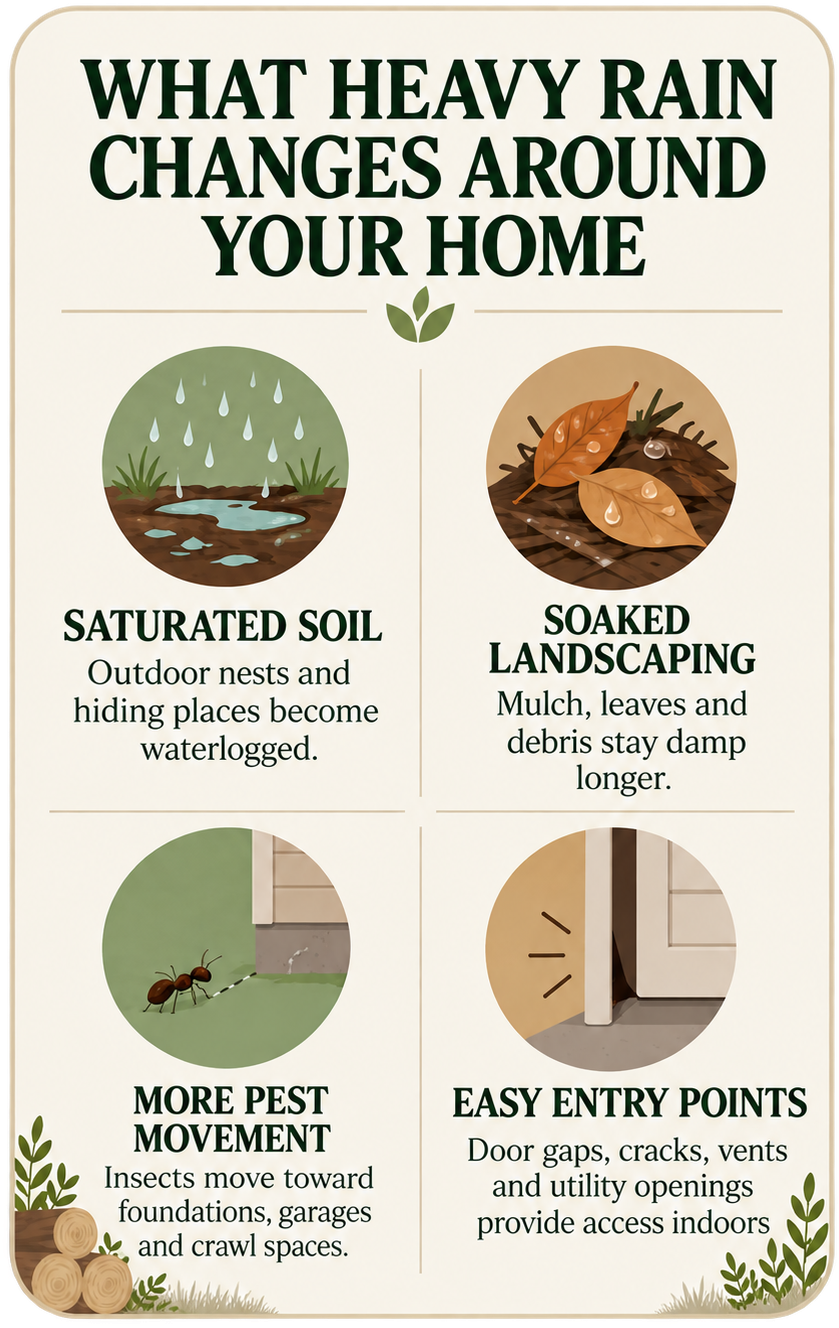
Many common household pests spend most of their time outdoors in soil, mulch, leaf litter, beneath rocks or around landscaping. Those areas normally provide moisture, shade and protection. After prolonged or heavy rainfall, those conditions can change quickly. Soil becomes waterlogged. Mulch stays saturated. Small nesting areas flood. Leaves and organic debris remain damp for days. If gutters or downspouts aren’t moving water away from the house, the ground beside the foundation may stay especially wet.
Some pests move toward higher ground. Others head toward garages, crawl spaces, porches and foundations because those areas provide better shelter. Once pests are close to the house, even small openings can give them a way inside.
Ants Are Often One of the First Pests Homeowners Notice
Ants commonly nest outdoors in soil, beneath landscaping materials, under concrete and in other protected areas. Heavy rain can disturb those nesting sites and send ants searching for a more suitable location. Once they reach the house, they can enter through surprisingly small gaps. Cracks around windows and doors, openings along the foundation and spaces around plumbing or utility lines can all provide access.
Food and moisture inside can keep them moving farther into the home. Crumbs, pet food, pantry spills, water around sinks and small plumbing leaks may all provide what ants need. That’s why a trail can seem to appear out of nowhere after several days of wet weather. Wiping away the ants you see may help temporarily, but recurring trails usually mean there’s a colony nearby and a reliable route into the house.
Cockroaches Can Move Toward Drier Shelter
Some cockroach species normally live outdoors in mulch, leaf litter, wood piles and other damp environments. Heavy rain can disrupt those areas and increase the chance of cockroaches moving toward garages, crawl spaces, doors and other protected parts of a home.
That doesn’t mean every cockroach found after a storm came directly from outside.
German cockroaches, for example, are primarily indoor pests and are commonly introduced through boxes, appliances, deliveries and other items. Once inside, they do well in warm areas with easy access to food and moisture. That difference matters. One large outdoor cockroach in the garage after a storm is very different from repeatedly seeing small cockroaches or cockroach nymphs around kitchen cabinets and appliances. Rain may explain an occasional invader. Continued indoor activity can point to a more established problem.

Millipedes Can Suddenly Appear in Large Numbers
Millipedes are one of the clearest examples of weather-related pest activity. They normally live outside in damp areas with plenty of decaying organic material. Mulch beds, leaf piles, compost, shaded landscaping and soil beneath stones all provide suitable conditions. After prolonged rain, homeowners may suddenly find millipedes crawling across patios, foundations, garage floors and doorways.
Some make their way indoors. They generally don’t survive well inside dry living spaces, but large numbers can still become a nuisance. If millipedes keep showing up around the home, the bigger issue may be what’s happening outside. Thick mulch, accumulated leaves, excess irrigation and poor drainage can all create the damp conditions they prefer.
Centipedes May Follow Other Pests
Centipedes also like protected areas with moisture, but they’re predators. They feed on insects, spiders and other small organisms. That means an increase in centipedes can sometimes follow an increase in other pest activity. Outdoor centipedes commonly hide beneath rocks, mulch, logs and landscaping materials. House centipedes may also survive indoors, especially in basements, bathrooms, crawl spaces and other humid areas. Seeing one occasionally isn’t unusual. Frequent sightings can be a sign that excess moisture or other insects are providing the conditions they need.
The Problem Often Starts Outside
When pests appear after a storm, it’s easy to focus only on what’s crawling across the floor. The better place to start may be outside. Walk around the home once the rain stops. Look for water collecting against the foundation, overflowing gutters, downspouts that empty too close to the house and thick mulch pressed against exterior walls. Check beneath decks, around porches, near crawl-space entrances and along garage doors. Leaves, wood and other materials can hold moisture and provide places for pests to hide close to the structure. The closer pests are to the house, the easier it is for them to find a way inside.
Pests don’t need an obvious opening. Worn weather stripping, gaps under exterior doors, torn screens, foundation cracks and spaces around utility lines can all be enough. Garage doors are another common trouble spot, particularly around the bottom corners. Heavy rain doesn’t necessarily create these openings. It often makes them more noticeable because there’s suddenly more pest movement around the structure. Repeated activity after storms can actually help reveal where pests may be getting in.


Better Drainage Can Reduce Pest Pressure
You can’t control how much it rains, but you can improve what happens to that water once it reaches your property.
Make sure gutters are clear and downspouts are directing water away from the foundation. Pay attention to low spots where water consistently collects after storms. Mulch deserves a look too. A heavy layer pushed directly against the house can stay damp for days and provide insects with protected shelter only inches from the foundation.
Inside, plumbing leaks and excess humidity can create similar problems. Moisture beneath sinks, around appliances, in basements or inside crawl spaces can make those areas more attractive to cockroaches, centipedes and other pests.
Reducing unnecessary moisture removes one of the conditions many pests depend on.
Not Every Bug After a Storm Means You Have an Infestation
A few millipedes wandering indoors after several days of heavy rain may simply be temporary invaders. One outdoor cockroach in the garage may be too. Persistent ant trails, repeated cockroach sightings, cockroach nymphs or pests appearing in several rooms are more concerning.
Those patterns may indicate something more than temporary weather-related activity. This is also why spraying every insect you see isn’t always the best solution. The treatment for millipedes entering from wet landscaping is different from the approach needed for an established indoor cockroach infestation.Good pest control starts with identifying what’s there and figuring out why it’s there.
If pest activity fades once the weather dries out, you may only be dealing with occasional invaders. If pests keep returning, appear in large numbers or continue showing up long after the rain has stopped, it’s worth taking a closer look. A professional pest inspection can help determine what species is present, where it may be entering and whether the problem is primarily outdoors or has become established inside the home.
At Ease Pest Solutions provides general pest control for homeowners dealing with ants, cockroaches, millipedes, centipedes and other common pests throughout North and South Carolina.Heavy rain is part of life in the Carolinas. It doesn’t have to mean sharing your home with everything that gets displaced by it.



